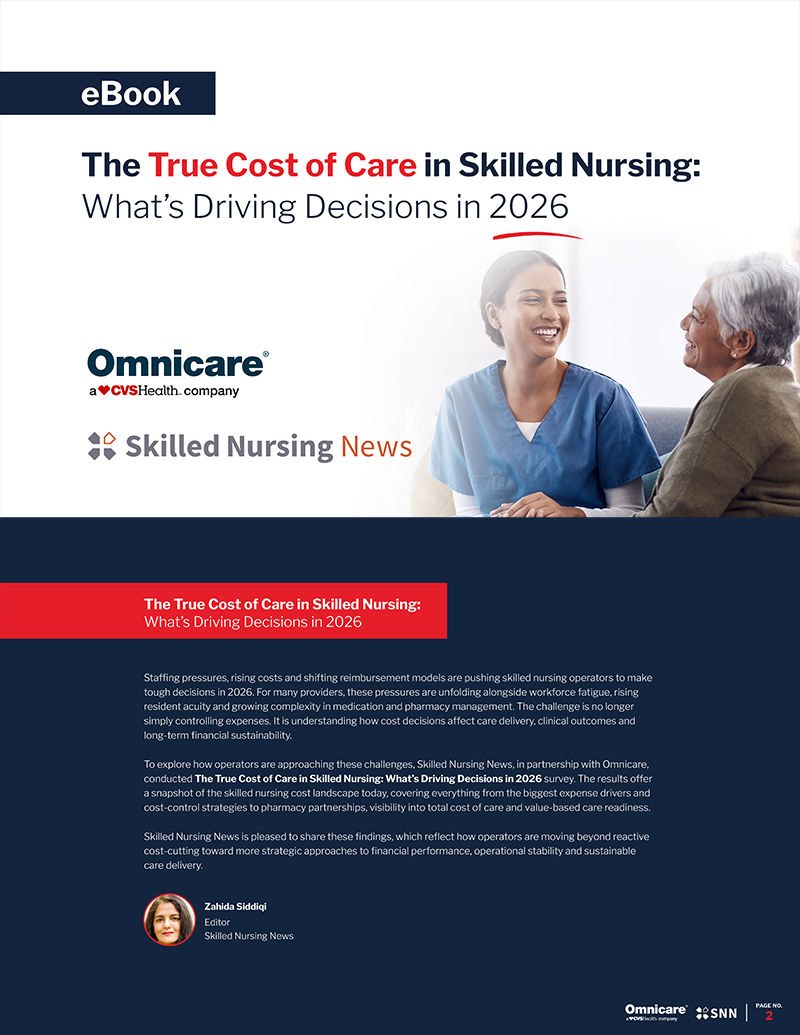
New Survey Data Reveals What’s Really Driving Cost Decisions in Skilled Nursing
Staffing pressures, rising costs, and shifting reimbursement models are pushing skilled nursing operators to make tough decisions in 2026. In partnership with Skilled Nursing News, Omnicare surveyed skilled nursing leaders (79% of them C-suite executives, owners, VPs, or directors) to understand how operators are approaching the biggest expense drivers, cost visibility, and value-based care readiness. Download the free eBook to see the full data set and what it means for your organization’s financial strategy.
- 81% say staffing and labor drove the largest cost increase
- 90.5% of skilled nursing providers saw total care costs increase in the past year
- 57% say wage pressure and labor shortages are the greatest threat to financial sustainability
What’s Inside the eBook
This eBook unpacks findings from 42 post-acute care professionals on the true cost landscape facing skilled nursing in 2026, including:
- Where care costs are rising fastest and by how much
- How much of the operating budget is going to healthcare and pharmacy expenses
- The #1 cost structure change operators want to make
- What’s projected to be the biggest financial challenge over the next 12 months
- How pharmacy partnerships factor into cost-management decisions
- Where visibility into total cost of care is falling short
- How value-based care priorities are reshaping operational strategy
Key Findings at a Glance
90.5% of respondents saw total care costs increase over the past 12 months, half of whom reported a significant increase; nearly half (47.6%) allocate 40%+ of their operating budget to healthcare costs, including pharmacy.
81% say staffing and labor saw the largest cost increase this past year, and 66.7% expect staffing and labor costs impacting care delivery to be their biggest financial challenge over the next 12 months.
52.4% call a pharmacy partner’s ability to manage total cost of care a top decision factor, and lowering overall pharmacy costs was the #1 change operators want to make to their cost structure (45.2%)
31% say VBC is their greatest priority and are already participating in VBC models, while another 59.5% are taking active steps toward it
The Data By the Numbers
- 90.5% saw total care costs increase over the past 12 months (50% “significantly”)
- 47.6% allocate 40% or more of their operating budget to total healthcare costs, including pharmacy
- 81% say staffing and labor saw the largest cost increase in the past year
- 45.2% would lower overall pharmacy costs first if they could change one part of their cost structure
- 71.4% implemented workforce restructuring or staffing model adjustments as a cost-control strategy in the past 12 months
- 57.1% identify wage pressure and labor shortages as the greatest cost-related threat to long-term financial sustainability
- 31% say value-based care is their greatest priority and are currently participating in VBC models
Who This eBook Is For
- Skilled nursing and senior living operators evaluating cost-control strategy for 2026 and beyond
- C-suite executives, owners, VPs, and directors responsible for financial performance and long-term sustainability
- Directors of Nursing and clinical leaders balancing staffing stability with quality care delivery
- Finance and operations leaders assessing pharmacy partnerships and total cost of care visibility
- Organizations building or refining a value-based care strategy ahead of CMS’s 2030 VBC coverage goal
About the Survey
This eBook is based on The True Cost of Care in Skilled Nursing: What’s Driving Decisions in 2026 survey, conducted by Skilled Nursing News in partnership with Omnicare. Forty-two professionals from post-acute care organizations contributed to the findings (79% of whom are C-suite executives, owners, VPs, or directors), providing a leadership-level view into how skilled nursing operators are evaluating cost pressures, pharmacy-related expenses, labor challenges, and value-based care priorities in 2026.
- Skilled Nursing News and Omnicare co-branding/logo lockup, consistent with the eBook cover design
- Optional pull-quote from Zahida Siddiqi (Editor, Skilled Nursing News) or Omnicare’s perspective section, framed as a short editorial callout
Frequently Asked Questions
90.5% of survey respondents said their total care costs increased over the past 12 months, with half reporting a significant increase. Nearly half of respondents now allocate 40% or more of their operating budget to total healthcare costs, including pharmacy.
Staffing and labor costs, by a wide margin. 81% of respondents said staffing and labor saw the largest cost increase in the past year, and two-thirds expect staffing and labor costs impacting care delivery to remain their biggest financial challenge over the next 12 months.
Very. 88% of respondents say a pharmacy partner’s ability to help manage total cost of care is either extremely important (a top decision factor) or very important. Lowering overall pharmacy costs was also the #1 change operators said they’d make to their current cost structure.
Fill out the form above to download the free eBook, which includes the complete survey results, charts, and Omnicare’s perspective on what these trends mean for skilled nursing operators in 2026 and beyond.